Understand the exposure
Review the relevant climate hazards and how they could change over time, identifying the risks that warrant attention at each location.

MAPMORTAR · PHYSICAL CLIMATE RISK
MapMortar needed physical climate risk expertise alongside its decarbonisation work. I delivered assessments for its clients across the UK and Germany, combining climate information with building surveying knowledge to explain how changing weather could affect each property. The findings were integrated into MapMortar’s wider reports and informed property management plans.
Physical climate risk · Building vulnerability · Property management
THE STARTING POINT
During this stage of the collaboration, MapMortar subcontracted all of its physical climate risk assessments to me. I took responsibility for the assessments and their technical findings, complementing the team’s decarbonisation expertise.
The task was to understand what climate exposure meant for the assets themselves: their construction, services, use and ability to cope with extreme weather. That required professional judgement about the building as well as an understanding of the hazards at its location.
The work included individual property assessments and subsequently extended to a 47-building portfolio commission.
THE APPROACH
Review the relevant climate hazards and how they could change over time, identifying the risks that warrant attention at each location.
Consider the building’s fabric, services and use alongside the information available about existing protection and management arrangements.
Assess potential consequences for occupants and operations, then set out proportionate actions and where further information or specialist advice is needed.
My building surveying background helped me interpret the relationship between exposure and vulnerability. For desktop assessments, I made the building assumptions and information gaps clear, so the findings could be used with an understanding of the evidence behind them.
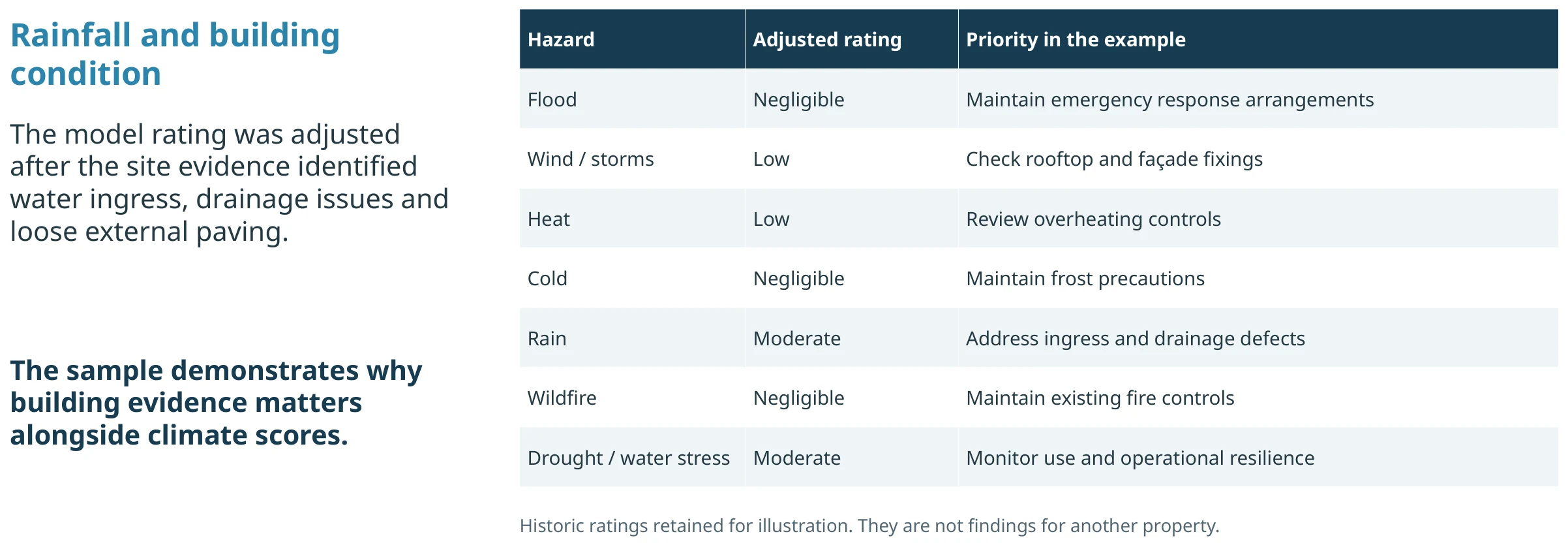
An example of my assessment approach.
FROM RISK TO RESPONSE
The assessments considered heat exposure alongside building sensitivity. Recommendations included reviewing shading, cooling and controls, linking the climate findings to occupant comfort and day-to-day operation.
Water-related findings led to recommendations on water efficiency, monitoring and leak detection, giving property teams practical areas to investigate and manage.
Where relevant, I considered rainfall and flood exposure alongside building sensitivity and the potential for disruption. The recommendations addressed maintenance, preparedness and the need for further investigation.
The reports also addressed responsibilities, inspections and monitoring. These actions helped connect climate resilience with the routines and plans used to manage a property.
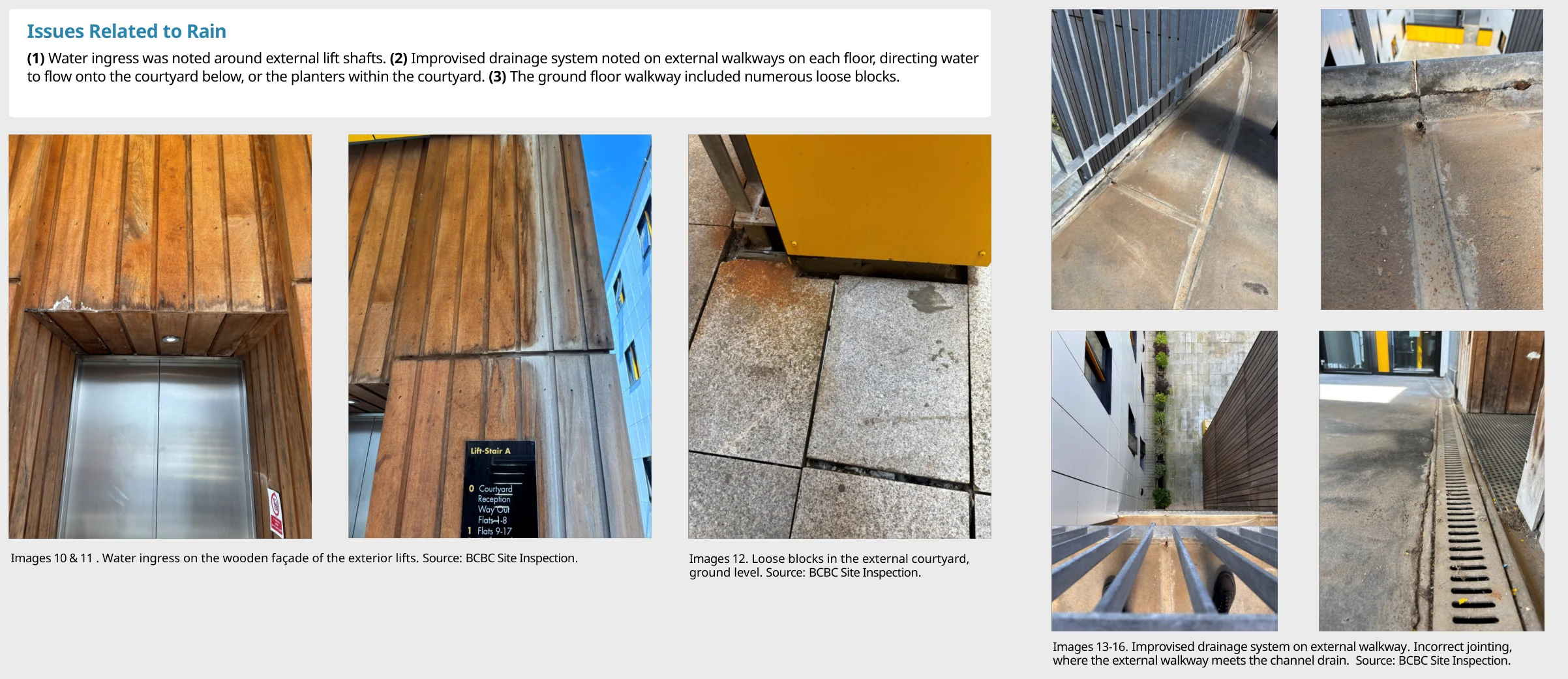
Inspection photographs from the same historic example, recording water ingress, loose paving and drainage defects. These illustrate the building evidence behind the risk judgement.
WORKING WITH THE TEAM
I authored the physical climate risk assessments and worked with MapMortar’s delivery team to incorporate them into its wider client reports. This brought the asset-level resilience findings together with the team’s broader work on the properties.
The emphasis was on explaining the findings clearly: which risks mattered, how the building could be affected and what the property team should consider doing next.

THE RESULT
The assessments were incorporated into MapMortar’s wider reports and used to inform property management plans. They gave the teams responsible for the buildings an asset-specific basis for considering climate risk within maintenance, operational procedures and future works.
For MapMortar, the collaboration added specialist physical risk assessment to its existing decarbonisation capability. For its clients, it connected climate information with the practical decisions involved in managing their properties.