
PHL Group
Connecting Evergreen, climate risk and commercial priorities
During a period of organisational change and acquisition activity, PHL wanted to understand what ESG meant for its business and its position among peers. Working within a three-person team from The Executive Partnership, I led the environmental work, connecting NHS Evergreen with operational decisions, climate risk and commercial priorities.

Environmental lead
Within a three-person specialist team
Operational interviews
Understanding the business behind the documents
Business decisions
Findings informed wider priorities and recruitment
The starting point
What did ESG mean for a changing business?
The board wanted a clearer understanding of growing ESG expectations and how PHL compared with its peers. In a period of change, it needed to understand the implications for commercial relevance, operations and future priorities.
NHS Evergreen provided a starting point for the discussion. The work broadened that view, considering how environmental issues connected with the group’s people, processes, governance and longer-term resilience.
The approach
Start with the people running the operations.
I interviewed key individuals across the business to understand how environmental responsibilities and activities worked in practice. The review drew on discussions covering fleet, estates, procurement and compliance, alongside the available documents and carbon information.
Those conversations helped connect published commitments with everyday decisions: what data existed, who held it, how activity was managed and where further work would be needed. My environmental contribution covered carbon reporting and governance, operational decarbonisation, energy and transport, and the wider supply chain.
Peer benchmarking added context, helping the team consider PHL’s position and the practices developing elsewhere in healthcare.

The wider business case
Connect environmental priorities with commercial decisions.
The discussion extended into the business implications of environmental performance. Energy, carbon and resource use had to be considered alongside operating costs, resilience, risk and customer expectations.
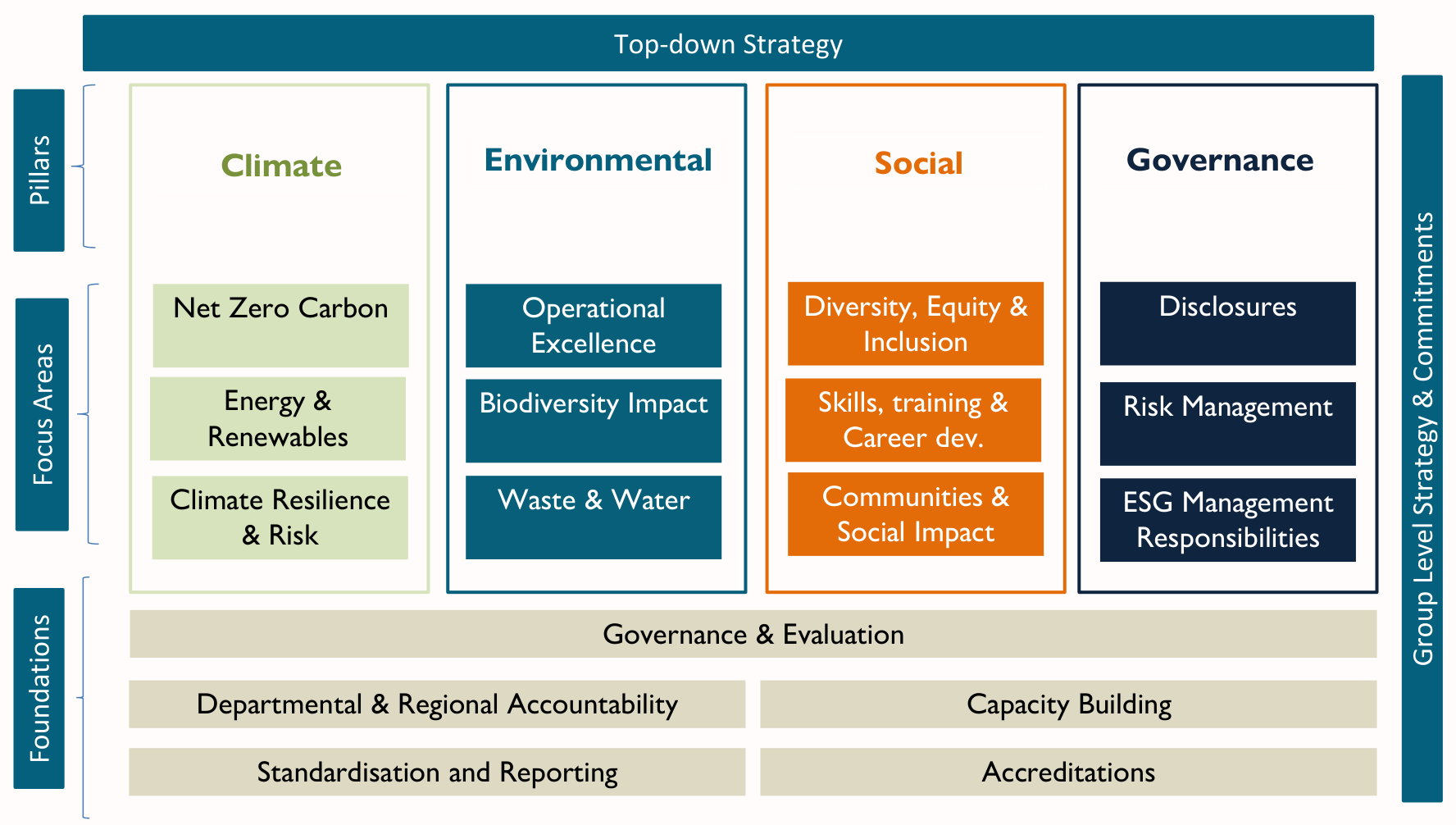
Climate resilience and risk featured in the proposed framework alongside net zero, energy, waste, water and biodiversity. Connecting these priorities with governance, departmental accountability and reporting helped show what a practical approach would need to address across the group.
Connecting the priorities across the business
Working together
Environmental expertise within a wider ESG team.
I worked as one of three individuals in The Executive Partnership team. I led the environmental assessment and recommendations, contributing to the wider ESG evaluation, peer comparison and roadmap.
The team brought these strands together into material for leadership and board discussion. The recommended foundations included governance, departmental accountability, capacity building, consistent reporting and alignment with existing management systems.
The result
Informing business decisions and recruitment.
The engagement brought together interview findings, evidence review and peer analysis in an ESG evaluation and recommended roadmap. It set out environmental priorities and the organisational foundations needed to take them forward.
The findings were used in wider business decisions and informed recruitment decisions about bringing in a sustainability lead. This connected the team's assessment with decisions about how to take sustainability forward across the business.